Strategies for Surviving Tech Layoffs Today
Every morning brings fresh tech layoffs news, turning social feeds into a stressful scroll of "Open to Work" banners. If this relentless wave of company layoffs feels less like a temporary dip and more like a permanent climate shift, you aren't imagining things.
Industry data reveals this is a broad market correction-a structural reset after a decade of aggressive corporate expansion. When reading about the Nike layoffs tech workers face, or unexpected Walmart tech layoffs, understand that cuts at highly profitable brands aren't reflections of individual failures. Rather, they are calculated corporate shifts toward a much leaner "new normal."
To survive this environment, you must look beyond company loyalty. Instead, it is time to actively build your personal career insurance: a diversified portfolio of adaptable skills that keeps you safely in control.
Why the 'Cheap Money' Party Ended: The Macroeconomics of the Tech Downturn
Profitable tech companies laying off employees while still making billions highlights a massive shift in how businesses fund their daily operations and future ambitions.
For a decade, near-zero interest rates acted like cheap fuel, allowing companies to borrow freely and hire aggressively. When central banks raised rates to fight inflation, that cheap money vanished overnight. Suddenly, the macroeconomic factors affecting silicon valley hiring forced a brutal pivot from endless growth to strict financial survival.
This expensive new reality triggered severe post-pandemic overhiring correction trends across the industry. Think of it like a massive home renovation where organizations realized they built too many extra rooms they cannot afford to maintain. They entered "efficiency mode," a rigid mindset where maximizing profit-per-employee completely replaced celebrating massive headcounts. With their financial foundations firmly downsized, executives are now looking at entirely different ways to operate those remaining rooms, particularly through automation.

The AI Factor: Is Automation Killing Jobs or Just Changing Them?
Seeing tools like Claude write code in seconds naturally causes panic. However, protecting your livelihood requires understanding the critical difference between task automation and job replacement. AI excels at isolated chores-like drafting boilerplate text-but a real job remains a complex web of interconnected decisions.
This distinction drives the actual impact of artificial intelligence on software engineering roles today. Companies aren't looking for unsupervised bots; they desperately require a "human-in-the-loop" to verify accuracy and responsibly guide AI outputs. Consequently, career survival means shifting your professional value from being a pure executor of tasks to becoming an orchestrator of intelligent tools.
Start rebranding your tech skills for emerging industries by mastering what machines cannot easily replicate. Upskilling for non-linear career paths requires focusing on three core human strengths: complex stakeholder negotiation, architectural empathy, and cross-functional ethics. Cultivating these distinct personal assets serves as the foundation for a diversified professional identity.
Building Your 'Career Portfolio': Diversifying Beyond a Single Employer
Relying on one company for your identity is like putting your life savings into a single stock. When headlines announce the latest Austin tech layoffs news, the shockwave understandably shatters our sense of self. You must firmly separate your personal worth from corporate efficiency decisions by adopting Career Portfolio Theory.
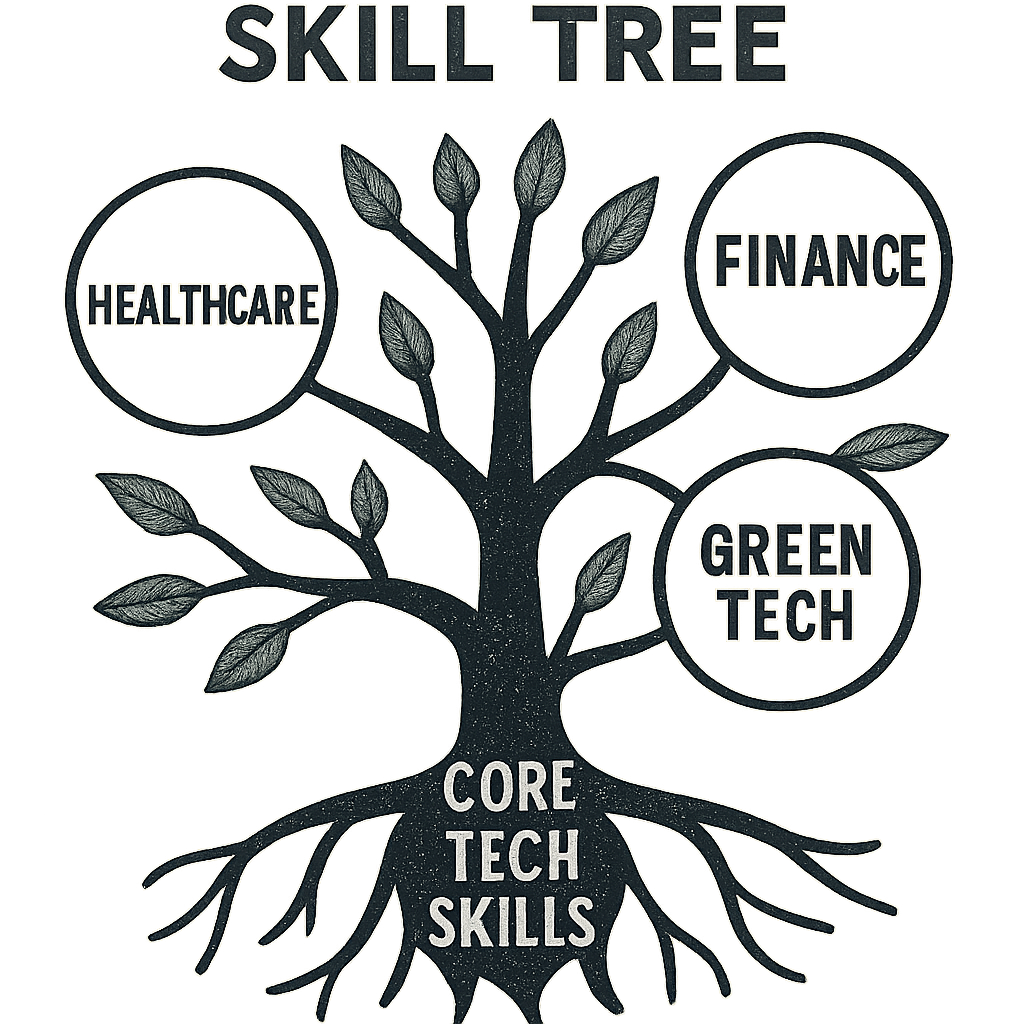
Cultivating "portable skills" instead of rigid job titles allows your expertise to seamlessly translate across multiple sectors. Building a recession-proof tech career means realizing your ability to manage complex databases or coordinate teams is just as valuable in healthcare as in software.
Maintaining professional identity after job loss requires a proactive community. Establish a "Networking Pulse" by casually reaching out to three people a week long before you need a favor. Leveraging networking during industry downturns only works if your relationships are already warm.
Start Networking Now-and Start Tracking Career Pages with JobNab
Start networking now, and start tracking career pages with JobNab. JobNab alerts you the moment a company posts on their career page, so you don't have to be actively looking for jobs every day. JobNab does the work for you and lets you know the moment a new role is posted, so you can stay ahead of the game and be the first to apply.
Treat these transferable talents and connections as your ultimate career insurance policy against sudden industry shocks.
The Layoff Fire Drill: Tactical Steps for the First 48 Hours
Getting a sudden HR meeting invite triggers panic, complicating how to deal with tech layoff anxiety. Before drafting an emotional post or making drastic budget cuts, initiate your "First 48 Hours" protocol. This initial financial triage separates raw emotion from strategic survival, ensuring you make choices that protect your livelihood rather than compromise it.
Taking control requires executing a precise plan before your corporate system access vanishes. Complete this immediate action checklist right away:
-
Save Performance Metrics: Secure your performance reviews and internal metrics to a personal drive.
-
Review Exit Documents: Prepare for severance package negotiation for displaced workers, checking closely for hidden non-competes.
-
Apply for COBRA/Insurance: Maintain uninterrupted healthcare coverage for you and your dependents.
-
Update LinkedIn Settings: Adjust your privacy settings to network and apply discreetly.
Once your baseline is secure, drafting a brief, pre-written "Exit Script" for your network prevents oversharing while recovering from a sudden career transition. With your immediate finances stabilized and your public narrative under control, you can confidently bridge into your next phase.
Your 90-Day Stability Roadmap: From Anxious Observation to Informed Action
You no longer need to watch headlines about tech layoffs with a sense of helpless dread. Instead of waiting for the axe to fall, you now recognize the signs of a permanent shift in tech culture. This "New Normal" is actually a powerful invitation to take total ownership of your professional path.
To move from anxious observation to tangible preparation, execute this proactive 90-day plan:
-
30-day (Skill Audit): Identify your knowledge gaps and document your current market value.
-
60-day (Network Expansion): Reconnect with five colleagues or mentors outside your immediate company.
-
90-day (Proof of Capability): Build a concrete side project or earn a certification that proves your adaptable capabilities.
The future of tech employment stability isn't about blind company loyalty; it relies entirely on relentless market relevance. The old tech dream hasn't died-the rules have simply changed to favor the proactive. By building your own diversified career portfolio, you are no longer just surviving the industry's shifts; you are fully prepared for the opportunities they bring next.